Education gives people more than a qualification. It can give them the confidence to ask questions, the skills to take part in working life and the language to meet neighbours whose experiences differ from their own. For Aimons Notre Afrique (ANA), cooperation between Africa and the Arab world offers a valuable setting in which to connect those ambitions.
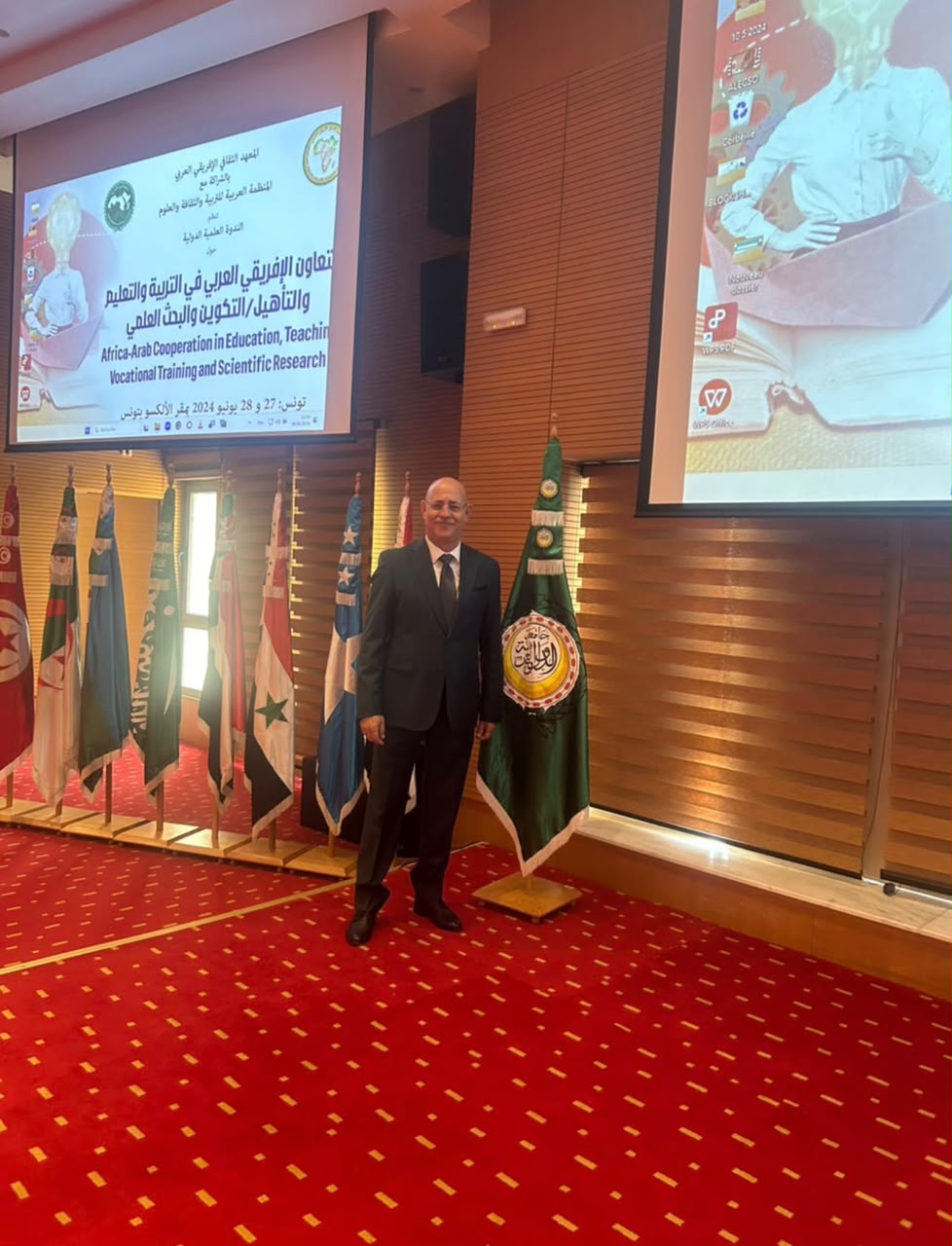
A photograph preserved in ANA’s archive places that conversation in a concrete setting. The screen behind the photographed participant names Africa–Arab Cooperation in Education, Teaching, Vocational Training and Scientific Research. It identifies ALECSO headquarters in Tunis and displays the dates 27–28 June 2024. Published here as an archive image, it introduces an educational theme that ANA wishes to develop through dialogue and practical proposals.
A shared agenda, shaped by local needs
Cooperation becomes useful when it starts with a question communities recognise. What helps a young person remain in education? Which practical skills are needed locally? How can teachers discuss difference respectfully? How can learning materials reach people who speak different languages?
These questions call for exchanges in which African and Arab participants both contribute knowledge. A school, community organisation or training centre should be able to explain its own needs and help shape the response. Local languages, working conditions and existing resources belong at the centre of that discussion.
Vocational learning and intercultural understanding can also be considered together. A future workshop might pair a practical skill with teamwork across different backgrounds, or combine responsible digital communication with discussion of how rumours affect community relationships. Participants could share an example from their own lives, compare approaches and develop a small task together.
From a meeting room to a workable partnership
A useful partnership needs a clear route from conversation to action. One starting point would be a small exchange between educators and civil-society organisations: agree a specific learning need, prepare accessible materials, test an activity and listen to participants’ feedback. Each partner’s responsibilities and the resources required should be clear before the work begins.
Evaluation should ask what participants learned and what they could use afterwards. Attendance, teaching materials, feedback and follow-up would help partners improve the next activity. Returning to participants’ experience would keep the partnership focused on learning that matters in daily life.
An invitation to educational and cultural institutions
ANA welcomes dialogue with educational, cultural and civil-society institutions in the Kingdom of Bahrain, across the Arab world and throughout Africa. Areas for exploration include intercultural learning, responsible communication, vocational skills and exchanges between community educators. Any cooperation would be developed jointly, with agreed objectives and transparent evaluation.
The aim is to make room for reciprocal learning and enduring relationships. Institutions interested in discussing a concrete proposal can contact ANA to identify a shared priority, the people it would serve and a realistic first step.
Archive context: the event title, venue and dates are transcribed from the visible screen. ANA’s formal role remains to be documented. The cooperation proposals above are prospective.
Read the edited transcript
Edited transcript. [unclear] marks speech that could not be reliably transcribed; these passages need confirmation from the speaker or a source recording review.
- This long-established [unclear word] had a significant [unclear word]
- in establishing the Arabic language
- in [unclear country name], Ethiopia and the Horn of Africa generally.
- Why not also benefit from [unclear word]
- the bilateral relations developing well between Mauritania and Senegal?
- Mauritania and Senegal have intertwined relations, defined by more than language.
- They extend beyond language to ties...
- ties of blood,
- ties of marriage,
- and relations that developed through this component into commercial relations.